
Managing both fiat and crypto from one dashboard is no longer a fantasy. Here are four serious contenders.
Finance teams today face a fragmented setup. One bank account for dollars. A separate exchange for crypto. Another wallet for custody. This creates slow reconciliations and high fees. The platforms below solve that problem. Each gives companies a single place to hold, send, and receive both traditional money and digital assets.
1. Paybis
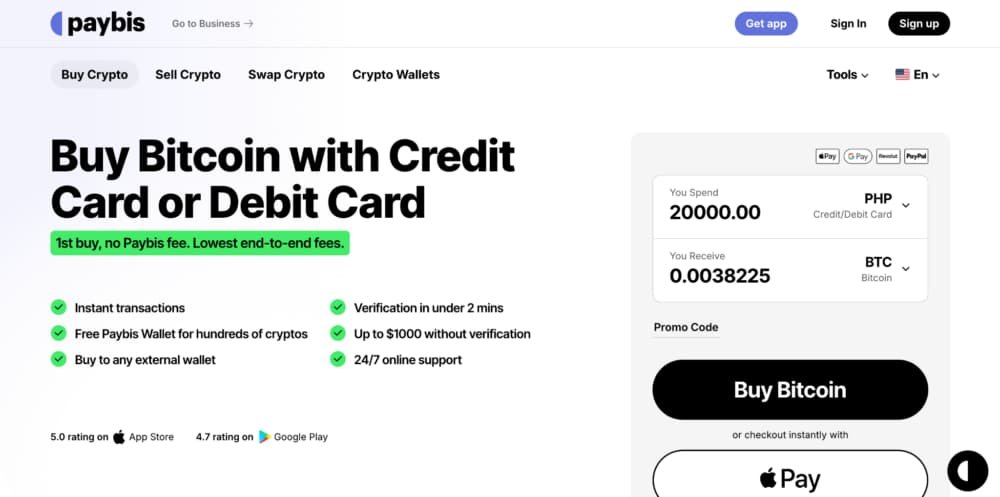
Paybis offers a corporate account that blends standard banking features with crypto handling. Companies get a dedicated vIBAN under their own name. This works like a regular bank account number for receiving euros or other fiat currencies. On the same dashboard, users also get a crypto wallet for storing and moving digital assets.
What the Account Includes
The platform removes the need for separate vendors. A business can receive a client payment in euros via the vIBAN. Then, inside the same interface, the user can convert the euros to Bitcoin or USDC. No external exchange required. The crypto wallet supports multiple blockchains. Sending crypto to a supplier or employee takes a few clicks.
Key features for corporate users:
- Dedicated company‑named vIBAN for SEPA and other fiat transfers
- Built‑in crypto wallet with support for major assets
- OTC desk for large fiat‑crypto trades without slippage
- Send and receive both fiat and crypto from one dashboard
- No need to integrate multiple third‑party APIs
OTC Liquidity for Businesses
Large transactions often suffer from poor exchange rates. Paybis includes an over‑the‑counter desk. Companies can quote a price for buying or selling six figures of crypto. The trade settles directly into the corporate account. This matters for treasury teams moving payroll or vendor payments across asset types.
2. Wirex Business

Wirex targets companies that want to spend crypto like cash. The platform gives businesses a multi‑currency corporate account linked to crypto card issuance. Employees can receive a physical or virtual card. They spend crypto or fiat at any merchant that accepts standard cards. The dashboard handles conversion at the point of sale.
Card Issuing and Exchange
The core product is the card. A company loads USDC, Bitcoin, or euros onto a card balance. When an employee swipes the card, Wirex converts the crypto to local currency instantly. This removes the need for employees to manage their own wallets or exchange accounts. The finance team controls limits and funding sources from one portal.
Wirex Business strengths:
- Direct crypto‑fiat exchange inside the dashboard
- Corporate cards in multiple currencies (EUR, GBP, USD)
- Real‑time spending tracking per card or per team
- Built‑in crypto wallet for storing assets
Geographic Focus
Wirex holds strong positions in Europe. The platform has regulatory licenses in the UK and several EU countries. Outside these regions, service levels drop. Companies in Asia, Africa, or Latin America may find limited onboarding options or fewer fiat currency pairs. For European businesses, though, Wirex provides a smooth card‑spending experience.
The platform also lacks deep custody features. Companies holding large crypto balances for long periods may want a separate storage solution. Wirex works best as an operational account for daily spending rather than long‑term treasury.
3. BitGo
BitGo focuses on institutional‑grade custody. Regulated funds, family offices, and large corporates use it to store crypto safely. The platform also adds staking and trading features. But unlike Paybis or Wirex, BitGo does not offer a native IBAN or fiat bank account. Companies need a separate bank partner for euro or dollar transfers.
Custody First
BitGo invented multi‑signature wallet technology. Every crypto wallet requires multiple approvals to move funds. This prevents a single hacked key from draining the account. The platform also ensures digital assets against security breaches. For compliance‑heavy organizations, BitGo provides audit trails and proof‑of‑reserve reports.
What BitGo delivers for corporate treasury:
- Qualified custody with $250 million in insurance
- Staking rewards for assets like Solana, Ethereum, and Polkadot
- Over‑the‑counter trading desk for large orders
- Wallet infrastructure that integrates with existing accounting systems
Missing Fiat Rails
The main gap is fiat. BitGo does not provide bank accounts or payment cards. A company using BitGo still needs a traditional bank to receive customer payments or pay suppliers in dollars. The crypto wallet holds assets, but moving value between crypto and fiat requires a separate exchange account. This adds complexity for finance teams that want a single dashboard.
BitGo suits regulated investment funds that already have banking relationships. For an operating business that wants to pay salaries or invoices in crypto, the lack of fiat on‑ramps becomes a problem.
4. FiatGate
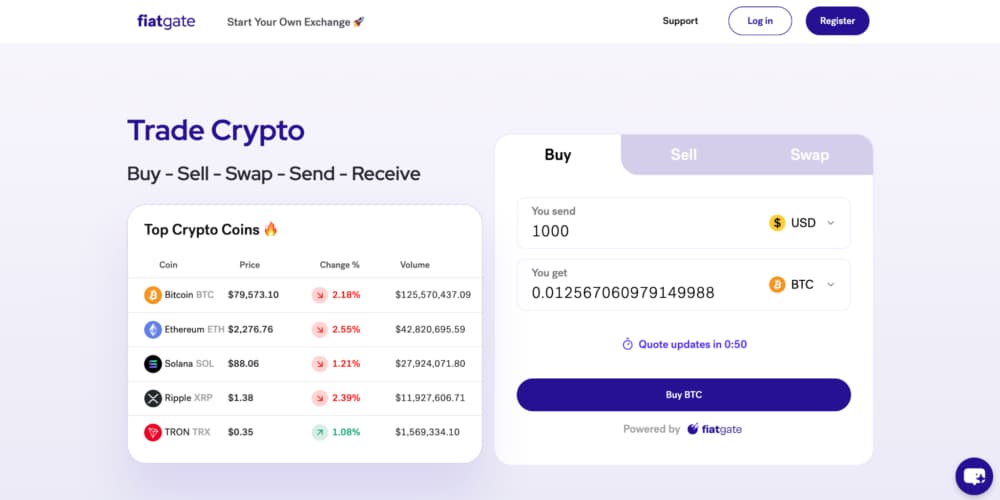
FiatGate offers a different model. The platform provides white‑label exchange services to neobanks, payment processors, and fintech companies. A business can take FiatGate’s technology and launch a branded crypto trading feature inside its own app. The platform handles fiat on‑ramps, compliance checks, and liquidity.
Customizable for Partners
FiatGate does not sell directly to most end companies. Instead, it powers other platforms. A neobank with one million users can add crypto buying and selling without building the backend. FiatGate supplies the API, the crypto wallet infrastructure, and the connection to payment gateways. The neobank keeps its own branding and user interface.
FiatGate partner capabilities:
- White‑label exchange widget for websites and mobile apps
- Fiat on‑ramp and off‑ramp via cards or bank transfers
- Multi‑currency crypto wallet support
- Automated KYC and transaction monitoring
Smaller Partner Network
The trade‑off is scale. FiatGate has fewer active partners compared to larger competitors. A business looking for a ready‑made corporate account cannot sign up directly with FiatGate. The platform requires a development integration. Smaller companies without engineering resources may find the process slow. For existing fintechs with technical teams, the white‑label model offers deep control.
FiatGate also lacks its own card-issuing or staking features. The focus stays on exchange and ramping. Partners must add other services separately if needed.
Choosing the Right Corporate Crypto Treasury Platform
Corporate treasury platforms now blur the line between bank accounts and crypto wallets. The best fit depends on whether custody, card issuing, or a full operational hub matters most to your finance team.
Paybis gives companies a combined vIBAN and crypto wallet with OTC liquidity. Wirex Business excels at crypto card spending for European teams. BitGo leads in insured custody for regulated funds. FiatGate powers white‑label exchange for fintechs and neobanks.
Review the company’s primary use case first. Daily operations with fiat and crypto? Look at Paybis or Wirex. Long‑term storage of large holdings? BitGo. Building a crypto feature into an existing app? FiatGate. Each platform holds a clear position. No single vendor does everything. But the four options above remove the need for five separate banking and wallet providers.