Retail execution is no longer a visibility problem. Most teams already know what is happening in stores. They have photos, audits, reports. The issue is what happens after that moment.
A rep walks into a store, sees a gap on the shelf, documents it, and leaves. The reorder might happen later. Or it might not. Delivery is planned separately. Information gets passed between systems or people.
The process looks complete, but it is not continuous.
For SMB CPG brands and distributors in the US and Canada, this gap is where performance breaks down. Not because teams lack discipline, but because the workflow is split across tools that were never designed to work together.
The Real Shift in Retail Execution
The category is not evolving around more features. It is evolving around continuity. Earlier tools focused on capturing data. That layer is stable now. What is changing is how quickly that data turns into action.
When a product is missing, the system should allow a reorder in the same moment. When a store needs restocking, that should immediately affect the next route. When a visit ends, it should not create additional work somewhere else.
This is where the difference between platforms becomes visible. Some tools still treat retail execution as a reporting layer. Others start to connect it to sales and operations.
1. SimplyDepo
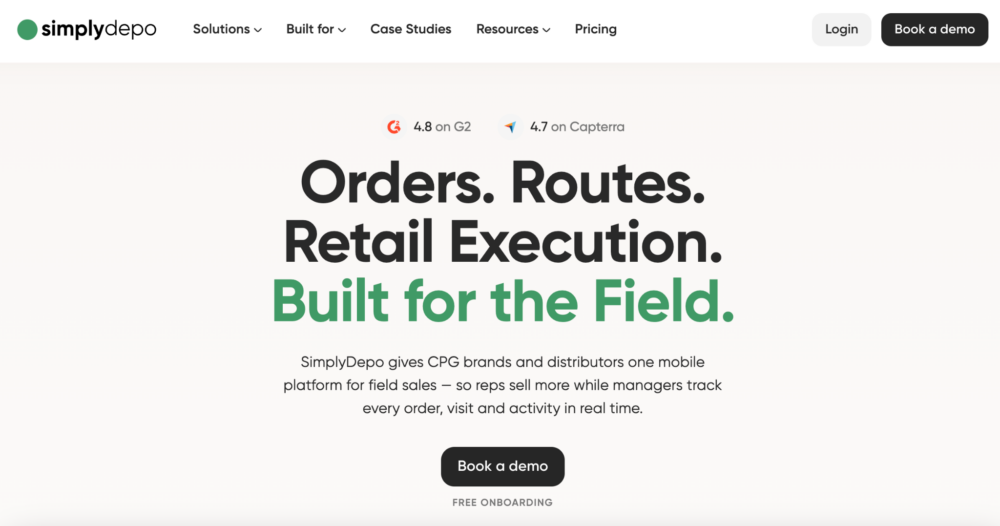
SimplyDepo is built around the idea that a store visit should be a complete workflow, not a data collection step. Instead of separating merchandising, sales, and delivery, the platform connects them into one process that happens in real time.
The rep does not move between systems. The workflow moves forward inside a single environment.
Key areas it covers include:
- Shelf audits and planogram compliance
- Photo reporting and in-store activity tracking
- Order capture during the visit
- Route planning and delivery coordination
- Van sales and invoicing
- Integration with QuickBooks and Shopify
What changes in practice is not just functionality, but timing. Actions that would normally happen later are handled immediately. That reduces follow-ups and removes gaps between observation and execution.
This approach works best for teams that combine merchandising, sales, and delivery in the same workflow. It is less relevant for companies that run audit-only programs or operate without field teams.
2. Repsly
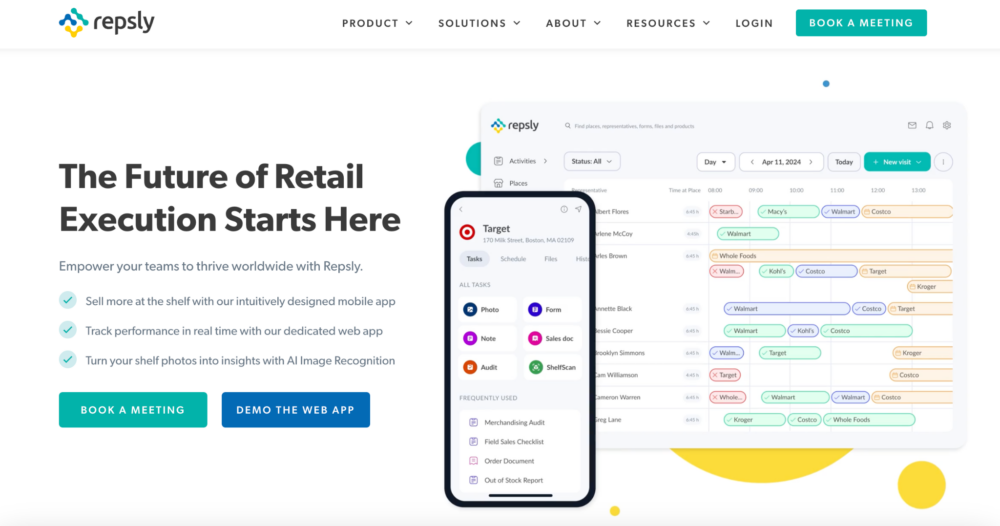
Repsly focuses on structuring merchandising operations and making store-level visibility consistent.
The platform is centered around repeatable workflows that ensure every visit follows the same structure. This creates reliable data across locations and helps teams monitor execution quality over time.
Core capabilities include:
- Store audits and task management
- Photo capture and reporting
- Performance tracking across locations
- Team activity monitoring
The strength of Repsly is clarity. Teams know what is happening in stores and can compare performance across accounts.
The limitation appears when teams need to act on that data. Orders, delivery, and financial workflows are handled outside the system, which introduces additional steps.
For organizations focused primarily on merchandising consistency, this separation can still be acceptable.
3. GoSpotCheck (FORM)
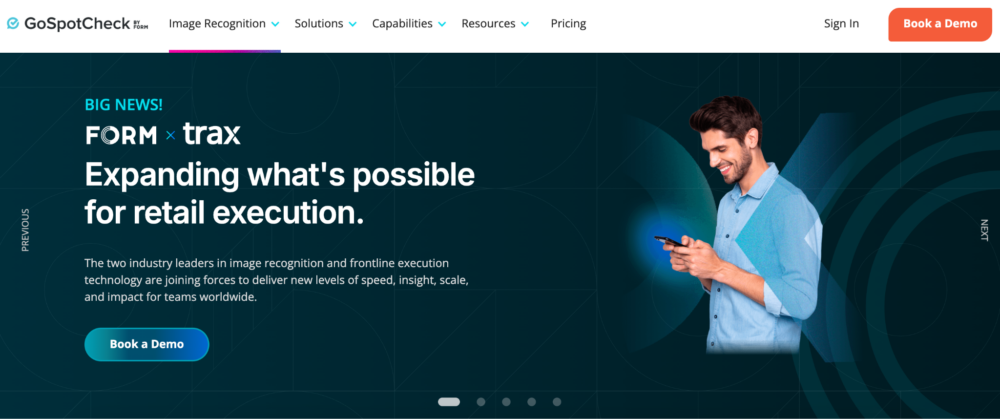
GoSpotCheck approaches retail execution as structured data collection in the field.
The platform organizes store visits around predefined tasks and uses image-based workflows to standardize how information is captured. This creates a consistent dataset that can be analyzed at scale.
It typically includes:
- Task-based store visit workflows
- Photo surveys and image documentation
- Data aggregation across locations
- Reporting and compliance tracking
This structure is useful in environments where documentation and consistency are critical.
At the same time, the workflow usually ends once data is captured. Teams that need to connect audits with ordering or delivery will need additional systems.
4. Pepperi
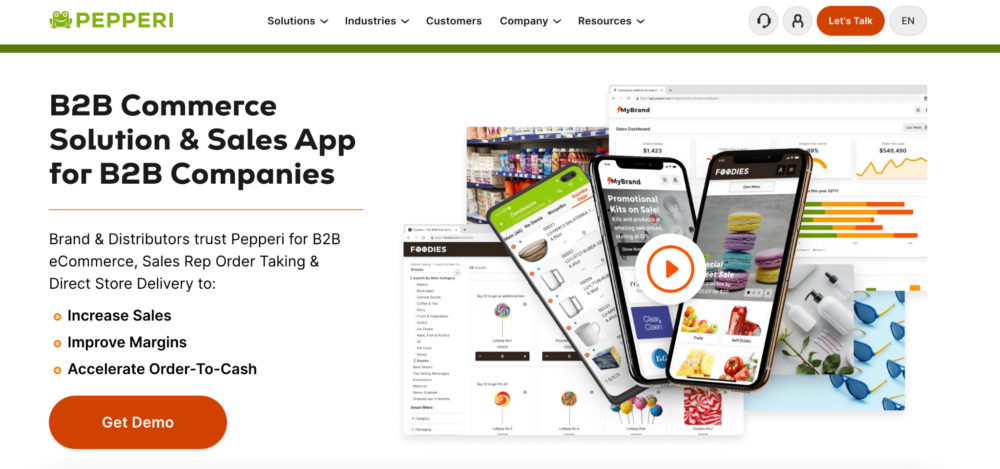
Pepperi combines retail execution, field sales, and B2B commerce into a single enterprise platform.
The system is designed to handle complex operations with large product catalogs, multiple pricing structures, and layered workflows. It supports both in-store activity and broader commercial processes.
Its scope includes:
- Retail execution and merchandising workflows
- Field sales and order management
- B2B commerce portals
- Route accounting and distribution support
Pepperi’s strength is coverage. It brings multiple operational layers into one system.
That same breadth also introduces complexity. Implementation can take time, and the platform is often better suited for larger organizations with structured processes and dedicated teams.
5. Skynamo
Skynamo is focused on field sales rather than merchandising.
The platform is built to help reps manage visits, capture orders, and maintain customer relationships while working in the field. It performs well in environments where order capture is the primary objective.
Key functionality includes:
- Mobile order capture
- Customer and visit management
- Offline operation
- Sales reporting and tracking
This makes it useful for distributors that prioritize sales activity.
The gap appears in retail execution. Shelf audits, planogram compliance, and photo-based workflows are not central to the product, which means merchandising visibility is limited.
6. Orders in Seconds (OIS)
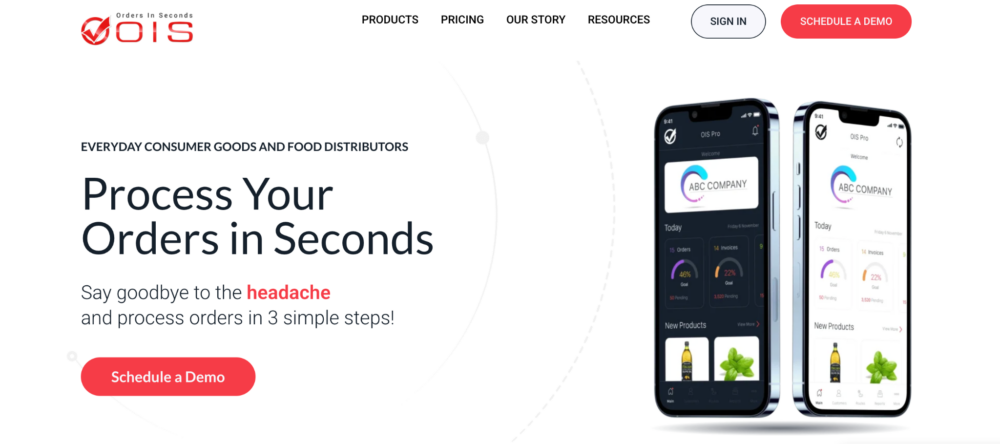
Orders in Seconds is designed around order entry and direct store delivery workflows.
The platform is often used by wholesale distributors that need a reliable way to capture orders in the field and connect them to accounting systems.
Its core focus includes:
- Order entry for field reps
- Integration with QuickBooks
- DSD workflows and delivery tracking
- Customer account management
This creates a strong foundation for sales and distribution operations.
Retail execution is not a primary focus, which means teams looking for structured audits or merchandising workflows will need additional tools.
7. WizCommerce
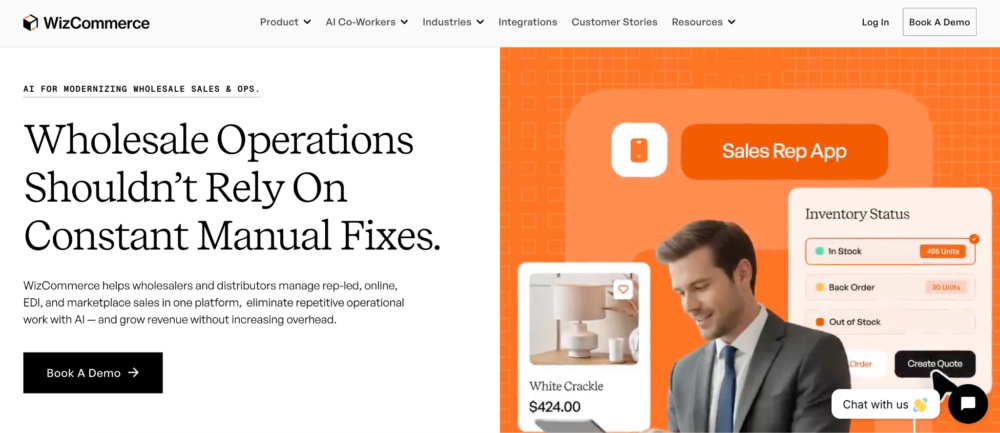
WizCommerce approaches the space from a digital commerce perspective.
The platform combines product catalogs, ordering systems, and AI-assisted tools to support wholesale sales. It is often used by brands that operate across both digital and field channels.
It typically includes:
- Digital product catalogs
- Order management systems
- AI-assisted product organization
- Wholesale sales workflows
This makes it relevant for teams that manage complex product assortments.
However, retail execution in the physical sense is not a core layer. In-store audits and merchandising workflows are not central to how the platform is structured.
8. Leadbeam
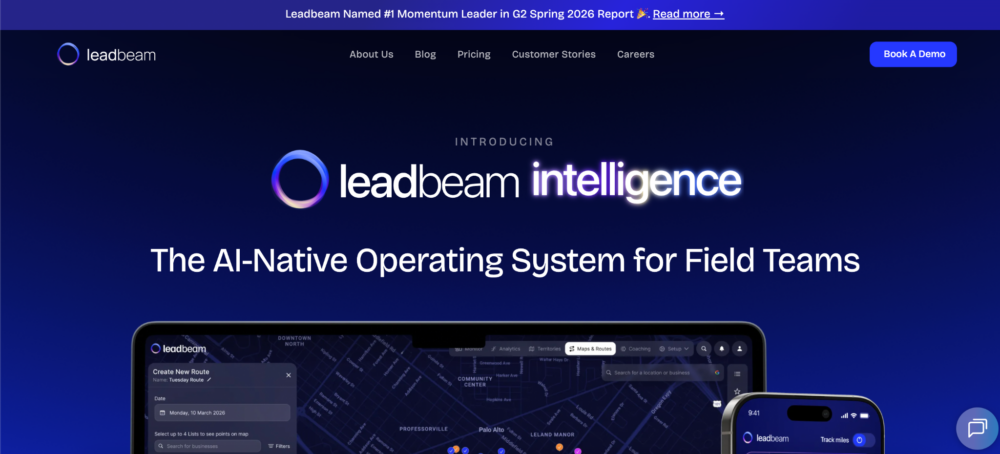
Leadbeam focuses on CRM and sales intelligence for field teams.
The platform is designed to capture interactions, manage leads, and provide insights into sales activity. It is closer to a CRM system than a retail execution tool.
Its functionality includes:
- Lead and account management
- Sales activity tracking
- Territory insights
- AI-assisted data capture
This supports teams that need better visibility into their sales pipeline.
It does not cover order processing or merchandising workflows, which limits its role in retail execution scenarios.
9. Spotio
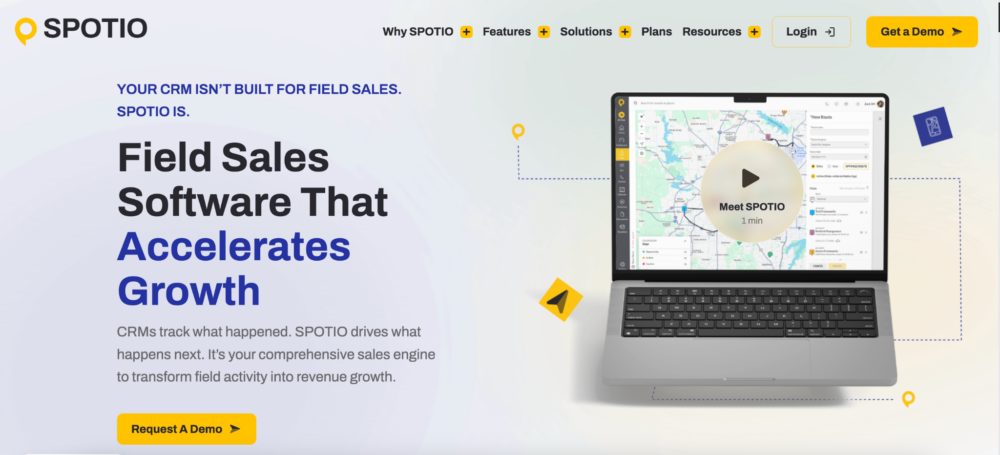
Spotio is built around tracking field sales activity and improving rep performance.
The platform provides tools to manage territories, log visits, and monitor productivity. It is focused on optimizing how reps spend their time.
Core areas include:
- Territory management
- Visit tracking
- Activity reporting
- Sales performance insights
This makes it useful for teams that want better control over field activity.
Retail execution and order workflows are not part of the core system, which means it does not address the full in-store process.
10. Zoey
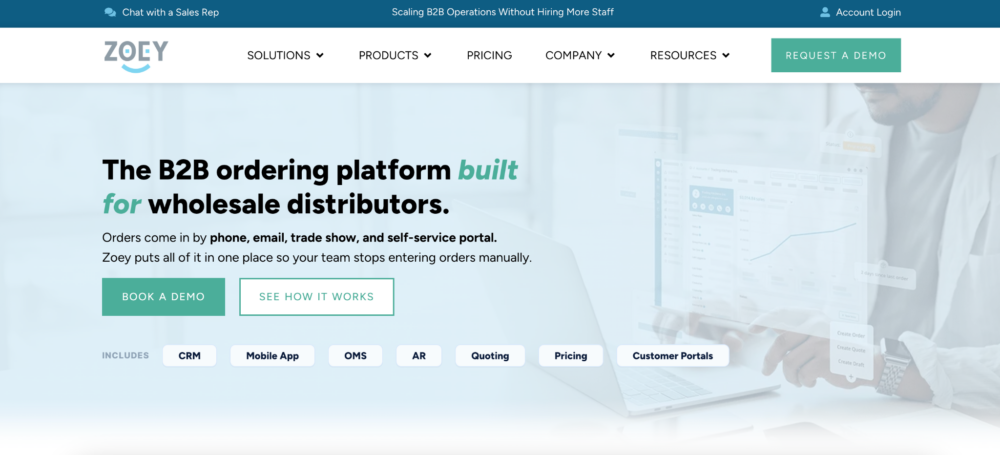
Zoey is positioned as a B2B eCommerce platform rather than a field execution tool.
It enables businesses to create customer portals where buyers can place orders independently. This shifts the interaction away from field reps and into digital channels.
The platform includes:
- B2B ordering portals
- Customer self-service functionality
- Custom pricing and catalogs
- Integration with backend systems
This works well for companies that operate primarily through online ordering.
For teams that rely on in-store visits, merchandising, and route-based workflows, it does not address those needs.
Where This Leaves SMB Teams
The market is not lacking tools. It is segmented. Some platforms focus on visibility. Others focus on sales. A few attempt to connect the full workflow, but often at a level designed for larger organizations.
For SMB CPG brands and distributors, the decision is less about choosing the most advanced tool in one category and more about choosing how connected the workflow needs to be.
When audits, orders, and deliveries are handled in separate systems, the process slows down. When they are connected, execution becomes more immediate and predictable. That difference is not always visible in feature lists. It becomes clear how work actually gets done in the field.