
Web scraping looks absurdly easy when you’re running five requests against a test page. Your script works, data flows, confidence builds. Small-scale tests don’t trigger any defensive mechanisms. Static pages don’t need rendering engines. This creates a false sense of stability that quickly disappears in production.
Production introduces variables your tutorial script never prepared you for. Anti-bot systems fingerprint traffic within seconds and start serving captchas or blank responses. JavaScript-heavy pages refuse to render content without actual browser execution behind the scenes. At scale, small inefficiencies quickly turn into serious failures. This article explains where scraping setups fail, what capabilities prevent those failures, and which solutions actually handle real production conditions.
Why Scraping Systems Fail Once Real Traffic Starts
Scaling exposes architecture problems that remain invisible during controlled testing with friendly targets. Request patterns that looked organic at low volume become obvious bot signatures when multiplied across thousands of concurrent connections. IP reputation decays rapidly as anti-bot systems aggregate behavioral signals across entire sessions and subnet ranges. Scripts that worked faithfully for weeks suddenly hit walls they never encountered during development or initial deployment.
The degradation follows a predictable sequence that accelerates as conditions worsen. Success rates slide from near-perfect to something that undermines data quality. Outputs grow inconsistent: missing fields, partial page content, silent failures with no usable error messages. Costs climb sharply as failed requests trigger expensive retry loops that deliver zero additional clean data. These failures usually come from structural issues, not bad luck.
Recurring Problems That Break Data Pipelines
Production scraping failures follow the same patterns across industries, company sizes, and technology stacks. Teams waste time blaming specific websites or temporary blocks when the real problem sits deeper in their architecture. A single blocked request looks like an isolated incident that doesn’t demand attention. A thousand blocked requests signal systemic weakness requiring fundamental changes, not incremental patches or quick fixes.
Recognizing these patterns early prevents months of reactive troubleshooting and wasted infrastructure spending on solutions that don’t address root causes. The most common failure points include:
- Weak proxy rotation strategies leading to blocking;
- Inability to render JavaScript-heavy pages;
- Poor scaling under high request volume;
- Fragile parsing that breaks on layout changes;
- Missing retry logic and error handling.
These issues compound and amplify each other, turning isolated problems into full-scale data pipeline outages that take days to untangle.
What Actually Determines API Reliability
Feature lists often look impressive but say little about real performance. Every vendor claims high success rates and global coverage without providing evidence that survives real-world testing. Actual reliability emerges from three factors: infrastructure stability, automation depth, and the ability to adapt when target websites change their defensive strategies without advance notice.
Strong APIs absorb operational complexity rather than adding new configuration layers that teams must manage. Proxy rotation should happen automatically without manual pool maintenance or monitoring dashboards. JavaScript rendering decisions belong at the platform level, not scattered across application codebases. Retry logic needs to distinguish between temporary network hiccups and genuine blocking events requiring strategy changes, not just more requests. Platforms that push these responsibilities onto users defeat the fundamental purpose of using an API in the first place.
Core Features That Matter in Real Conditions
Evaluation should focus on how APIs perform when sites actively block requests, not how they behave during ideal-environment benchmarks that vendors control. The capabilities worth measuring are those that maintain stability when target websites actively resist extraction attempts through increasingly sophisticated defensive systems.
When choosing a scraping API, prioritize:
- Reliable proxy rotation across IP types;
- Ability to bypass anti-bot protections;
- JavaScript rendering support;
- Stable performance under load;
- Flexible output and extraction options.
These capabilities determine long-term success far more accurately than any vendor’s published success metrics or carefully curated demonstration results.
Different Approaches to Modern Web Data Extraction
Scraping APIs diverge significantly in how they approach data extraction challenges. Some emphasize infrastructure depth with massive proxy networks and enterprise compliance frameworks that satisfy security teams. Others focus on automation workflows that schedule, monitor, and adapt extraction logic without manual intervention when conditions shift. A third category prioritizes intelligent parsing that turns raw HTML into analysis-ready structured data formats automatically.
No single approach works for every scenario across industries. Infrastructure-first tools excel at volume but demand technical expertise. Automation-first platforms reduce operational burden but sacrifice granular control. Data-first solutions eliminate parsing maintenance but work only on supported target types with predictable page structures.
6 APIs That Still Hold Up in Production
Scraping APIs differ in fundamental approach: some prioritize infrastructure depth, others emphasize automation, and a third group focuses on delivering structured data without requiring parsing logic. These differences remain invisible during demos but become painfully obvious under real production loads with adversarial targets.
The selection below ignores brand popularity and focuses entirely on behavior under pressure. Each tool handles blocking, scaling, and dynamic content differently. The right choice depends on your specific targets, request volumes, and team capabilities rather than any universal ranking that pretends one tool fits all situations.
1. HasData
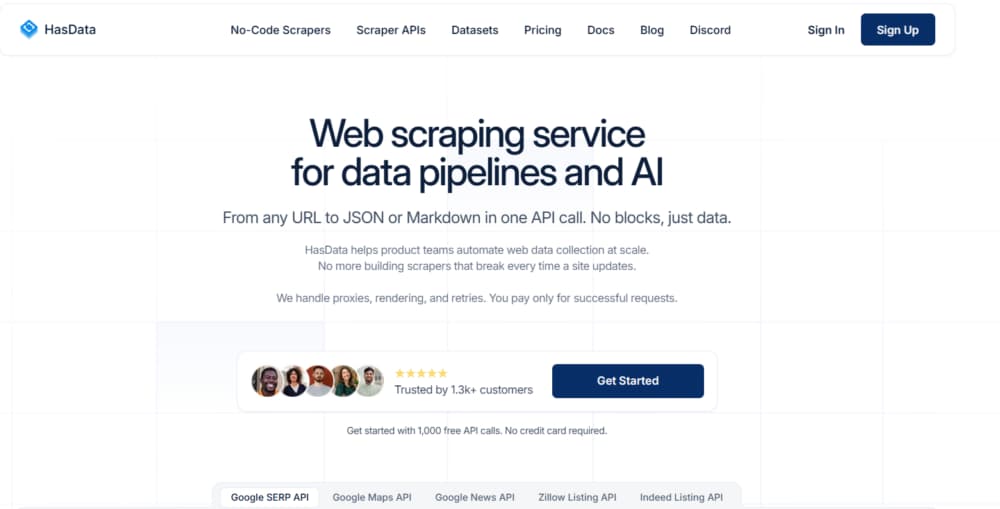
The HasData Web Scraping API is built around a unified scraping endpoint that handles the infrastructure internally. Proxies rotate automatically without manual pool configuration or monitoring. Anti-bot countermeasures run behind the scenes without requiring user intervention. Content rendering happens at the platform level rather than forcing teams to deploy separate browser services. This becomes critical once scraping turns into a production dependency, where downtime directly impacts the business.
A system that fails intermittently creates technical debt that compounds faster than most teams anticipate. HasData positions itself for environments where scraping must work consistently without engineering resources dedicating cycles to maintenance, troubleshooting, and constant configuration updates as target websites evolve their defenses.
End-to-End Scraping Without Fragmentation
Managing proxies, rendering engines, and extraction logic as separate services adds complexity. Each component introduces its own failure points and requires ongoing maintenance. Unified systems collapse these concerns into a single interface where the platform coordinates everything behind the scenes without exposing infrastructure details.
The platform supports production scraping through:
- Single API request for large-scale scraping;
- Automatic proxy rotation;
- Bypass of anti-bot systems;
- JavaScript rendering for dynamic pages;
- AI-based data extraction;
- Batch scraping and page interactions.
This setup reduces maintenance burden and supports stable long-term operations that survive target website changes without requiring architectural overhauls or dedicated scraping engineers.
Where It Works Best
HasData suits projects with continuous, high-volume scraping pipelines facing aggressive blocking from defended targets. It works best for teams that prioritize data delivery over infrastructure management.
2. Grepsr
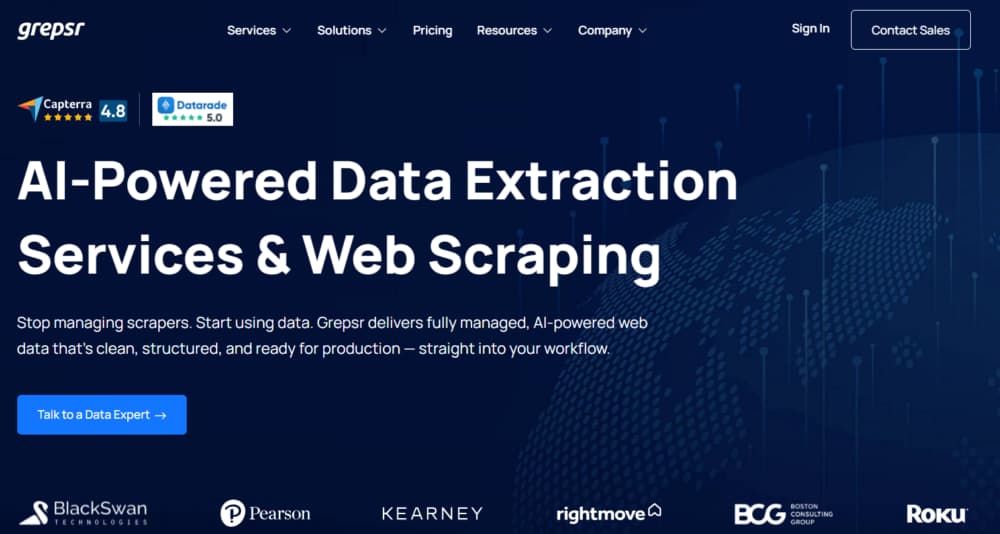
Grepsr operates as a managed data extraction service rather than a self-service API requiring significant technical configuration. Their platform combines automated scraping infrastructure with human oversight for quality assurance and edge case handling. This hybrid model suits organizations that need reliable data without building internal scraping expertise or dedicating engineering resources to pipeline maintenance.
The managed approach trades some flexibility and deployment speed for consistent output quality and reduced operational burden. Grepsr handles the entire extraction lifecycle: crawling, parsing, validation, and delivery in formats that integrate directly with downstream analytics systems and business intelligence platforms.
Why Grepsr Works as a Fully Managed Pipeline
Building reliable scraping pipelines demands ongoing investment in infrastructure, monitoring, and maintenance that many organizations underestimate during initial planning. Websites change layouts unpredictably. Anti-bot systems evolve their detection methods. Managing these challenges internally drains resources from actual data analysis and business value generation activities.
Grepsr addresses this through managed service delivery:
- Automated crawling and extraction;
- Human-verified data quality;
- Structured output in multiple formats;
- Integration with analytics and BI systems;
- Scalable extraction without infrastructure management.
Organizations that value data reliability over granular control will find this managed approach practical for sustaining long-term extraction operations without building dedicated scraping teams internally.
Best Use Cases
Grepsr works best for enterprise environments where data quality requirements justify managed service costs and internal teams lack dedicated scraping expertise. Projects requiring structured data from complex websites with frequent layout changes benefit from the combination of automation and human oversight that catches edge cases before they contaminate downstream analytics.
3. DataForSEO
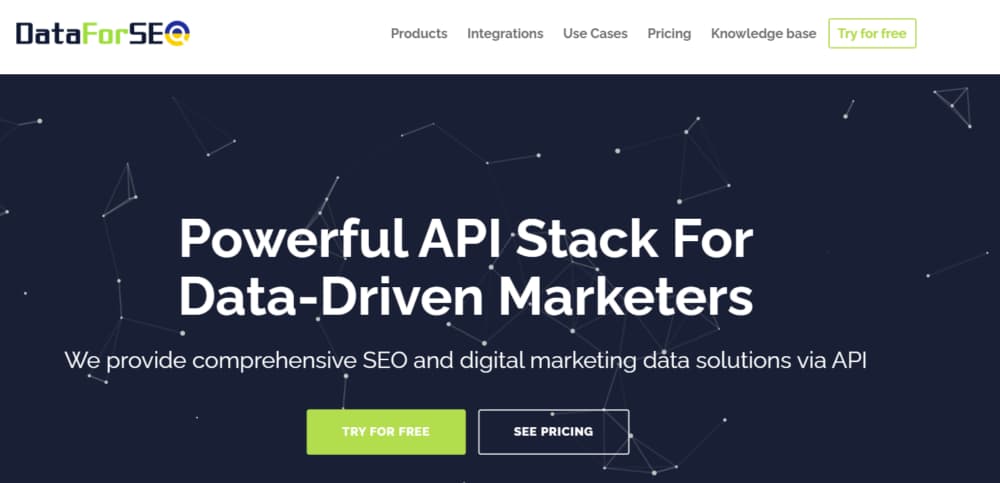
DataForSEO focuses specifically on search engine and SERP data extraction through structured APIs that return analysis-ready datasets. Their platform emphasizes data consistency and format reliability over general-purpose scraping flexibility. The narrow focus allows deep optimization for search-related use cases that broader platforms cannot match without sacrificing quality on other target types.
This specialization makes sense for organizations whose data needs center on search analytics, keyword tracking, or competitive intelligence rather than general web data extraction across diverse website categories. DataForSEO provides pre-built data schemas that eliminate parsing work entirely for supported extraction scenarios.
Structured Search Data Without Custom Work
Search engine results pages present unique extraction challenges that differ substantially from general website scraping. SERP layouts change frequently as engines update their presentation formats. Rich snippets, knowledge panels, and local packs introduce structural complexity that breaks generic parsing logic within days of deployment. Specialized extraction pipelines maintain compatibility through dedicated engineering teams tracking these changes.
DataForSEO delivers through:
- Pre-structured SERP data across major search engines;
- No custom parsing or selector maintenance;
- Consistent JSON output formats;
- Support for local, mobile, and desktop SERP views;
- Scalable request handling for keyword tracking.
Teams focused on search analytics avoid the maintenance burden that makes general scraping APIs unsuitable for long-term SERP data collection at a competitive scale.
When to Use This Approach
DataForSEO serves SEO platforms, marketing analytics tools, and competitive intelligence products that need reliable search data without building extraction infrastructure. Organizations where search insights drive core business decisions will find the specialization more valuable than general-purpose scraping flexibility across diverse website targets.
4. ScrapingBee
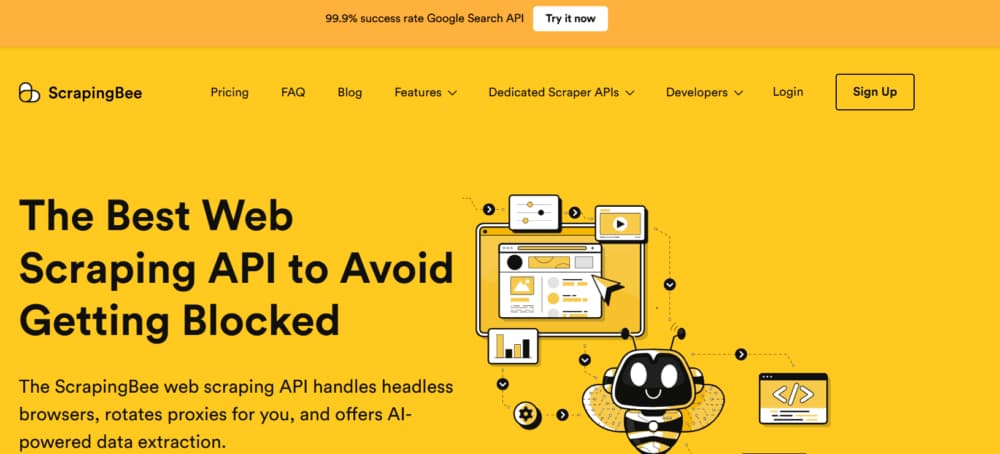
ScrapingBee simplifies scraping through a lean API that handles headless browsers, proxy management, and JavaScript rendering without overwhelming users with configuration complexity. Their platform targets teams that need scraping to work reliably without developing expertise in anti-bot countermeasures, browser pool management, or proxy rotation strategies.
Setup completes in minutes rather than days, which matters for projects where time investment must justify the data value proposition. The tradeoff involves accepting less granular control for edge cases in exchange for operational simplicity that keeps development velocity high and maintenance overhead low.
Streamlined Rendering Without Infrastructure Hassle
Many scraping projects don’t require enterprise-grade proxy networks or sophisticated anti-bot bypass strategies. They need JavaScript-heavy pages to render as functional browsers rather than simple HTTP clients that can’t execute client-side code. They need basic proxy rotation to avoid triggering rate limits on moderately defended targets. They need an API that delivers consistently without extensive onboarding processes.
ScrapingBee delivers this through:
- Built-in headless browser rendering;
- Automatic proxy management;
- Simple API integration;
- Support for JavaScript-heavy pages.
Quick deployment matters more than maximum configurability for teams that prioritize implementation speed and operational simplicity over infrastructure control and edge case optimization.
When This Makes Sense
ScrapingBee fits small to medium scraping operations where setup speed and operational simplicity outweigh the need for granular request control or enterprise proxy infrastructure. Teams without dedicated scraping specialists will find the learning curve manageable for projects requiring JavaScript rendering on moderately defended target websites.
5. SerpApi
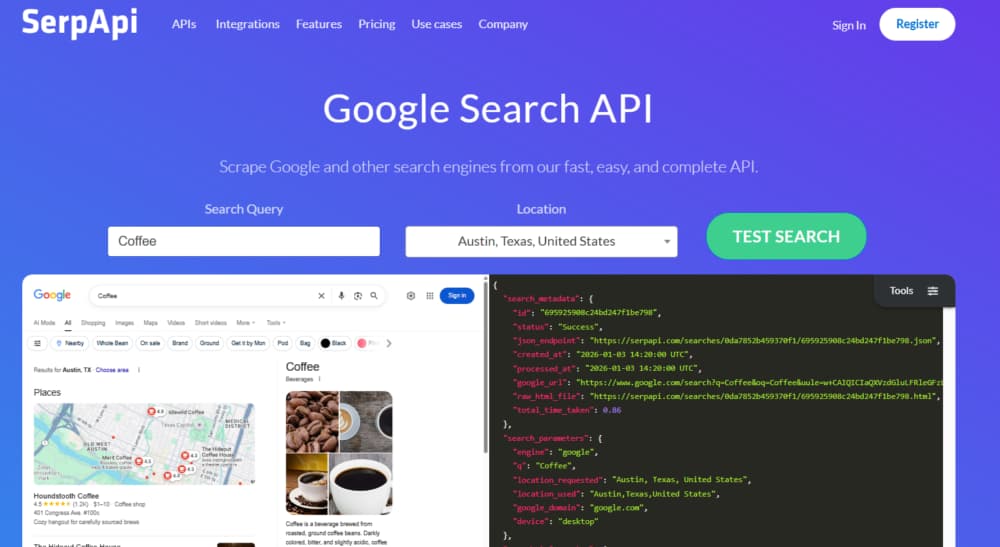
SerpApi narrows its focus to delivering structured search engine data without requiring users to build, test, or maintain parsing logic that breaks when SERP layouts inevitably change. Their platform handles extraction, data structuring, and format consistency across Google, Bing, and other search engines. Request parameters define what data you want. The API returns clean JSON ready for analysis.
This design eliminates the most brittle component of search scraping: keeping extraction logic synchronized with constantly evolving page structures that search engines update without advance notice. The tradeoff involves accepting supported data schemas rather than defining custom extraction patterns for unusual SERP features or niche search verticals.
Parsing-Free Data That Stays Consistent
Search result extraction fails most often through parsing breakage rather than blocking or infrastructure issues. Selector-based extraction logic that worked yesterday breaks today because engines changed element classes, modified layout structures, or introduced new SERP features that shift existing content positions. Maintaining compatibility demands constant monitoring and frequent code updates that drain engineering resources.
SerpApi addresses this through:
- Pre-built extraction for major search engines;
- Structured JSON responses;
- No selector or parsing maintenance;
- Support for local, mobile, and specialized SERP views;
- Batch and async request handling for volume workloads.
Data stability improves when extraction responsibility shifts to a provider whose entire business depends on keeping those pipelines operational against constantly evolving target platforms.
Ideal Scenarios
SerpApi is better suited for SEO platforms, marketing tools, and analytics products that need reliable search data without dedicating engineering resources to parsing maintenance. It fits projects where data consistency matters more than extraction flexibility.
6. Oxylabs
Oxylabs brings enterprise infrastructure depth to web scraping with massive proxy resources, compliance frameworks, and granular request controls. Their platform emphasizes stability under heavy load, where lesser infrastructure collapses under sustained request pressure. Organizations with mature data operations and complex targeting requirements gravitate toward this infrastructure depth.
The platform provides configuration flexibility that demands corresponding expertise to wield effectively without generating operational problems. Oxylabs suits environments where scraping constitutes business-critical infrastructure requiring enterprise service levels and predictable performance under real conditions from heavily defended targets.
Enterprise Infrastructure for Sustained Loads
High-volume scraping requires proxy infrastructure that maintains performance without degradation as request counts scale upward across diverse geographic targets. Residential and mobile IP pools need sufficient depth to avoid overusing individual addresses. Geographic targeting must reach the required regions without depending on intermediaries that introduce latency or reliability concerns under peak loads.
Oxylabs provides this through:
- Large proxy pools across residential, datacenter, and mobile IPs;
- Advanced request configuration;
- High-volume scraping support;
- Structured data extraction for supported targets;
- Compliance infrastructure for regulated industries.
This setup serves enterprise pipelines where scraping downtime has a direct revenue impact and recovery speed under adverse conditions determines whether data operations remain viable.
Where It Delivers the Most Value
Oxylabs fits organizations with in-house technical teams running large-scale scraping operations against defended targets. Companies where data pipeline reliability justifies infrastructure investment will find the enterprise-grade approach practical for sustaining extraction at competitive volumes without infrastructure bottlenecks.
How to Choose the Right API for Your Needs
API selection should match actual production requirements rather than impressive feature lists or vendor claims that don’t survive adversarial testing. The right tool for a small marketing data project looks nothing like the right tool for massive-scale extraction feeding real-time analytics dashboards. Testing candidates against actual target websites under realistic loads reveals differences that specification pages never capture or acknowledge honestly.
Internal technical capacity shapes viable options more than most evaluation frameworks admit. Platforms requiring extensive configuration deliver more control but demand expertise that smaller teams simply lack and cannot acquire quickly. Before making a decision, evaluate:
- Level of automation required;
- Type of target websites;
- Expected scale of requests;
- Data format needs;
- Internal technical resources.
These factors predict long-term success more accurately than vendor benchmarks, published case studies, or curated demonstration results against friendly test targets.
Final Thoughts
Scraping APIs reveal their true capability only under production conditions when target websites actively resist extraction through increasingly sophisticated defenses. Demo environments and controlled evaluations mask weaknesses that eventually cause pipeline outages and incomplete datasets when real traffic starts flowing. Infrastructure stability determines survival more than feature count when systems operate at a meaningful scale against protected targets.
Choose tools based on production behavior under real adversarial conditions rather than controlled demonstrations against cooperative websites. The gap between demos and real usage decides whether scraping actually works long term or turns into a recurring problem that drains engineering resources.